What is white label clothing?
With white label, you take an existing product from a manufacturer's range and put your own label in it. The product itself is not unique: the same hoodie can be sold by a hundred other brands, just with a different brand label. Advantage: fast, cheap and usually without a minimum production. Disadvantage: no real differentiation.
In practice this is called relabelling: the original brand label comes out, your woven neck label and care label go in. No production is involved, but fabric, weight, fit and construction stay those of the supplier, and another brand can relabel the same hoodie tomorrow.
What is private label clothing?
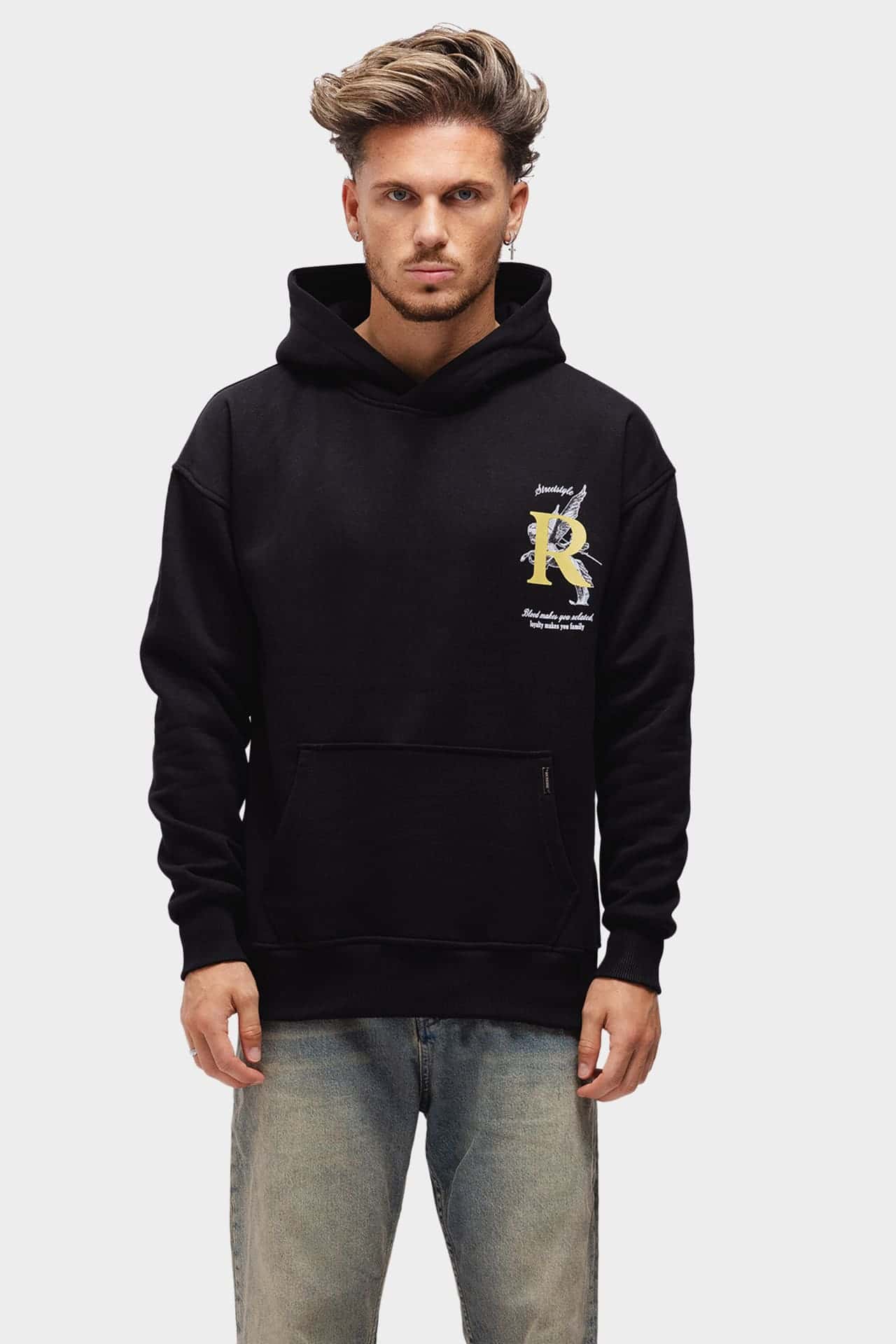
With private label, a product is made specifically for your brand. You decide the fabric, fit, colours, prints, labels and packaging. The product does not exist outside your brand.
Advantage: a brand experience entirely your own. Disadvantage: a higher minimum order (in the market usually 50 to 300 pieces per style) and a longer production time.
What is the difference between white label and private label?
The difference is in the product itself, and you see it in price and lead time. A worked example with a hoodie.
White label: you buy 50 black hoodies from a supplier's standard catalogue for €18 each, have your logo printed on them and put your brand label in the neck. Done in two weeks.
Private label: together with the factory you develop a hoodie in 420 GSM french terry, with a specific oversized fit, custom zip, woven brand label, neck print and hangtag. Lead time at least five to six weeks after payment plus the sample phase, price around €26 per piece at 100 pieces.
That is why virtually every established streetwear or fashion brand works with private label: only that way do you build brand recognition. If your hoodie is exactly the same as that of fifty other brands, it is not a brand, but a print on a generic product.
When is white label a smart choice?
- For merchandise (band shirts, events, corporate gifts) where speed and volume count, not product uniqueness.
- For the very first test of a brand concept, to see whether there is any demand at all.
- For small side products in your collection, such as socks or caps, where brand experience is less crucial.
Is print-on-demand a third route?
Yes, although in search results it is often mistaken for production. With print-on-demand nothing is in stock and a garment is only printed when someone orders. The supplier buys the base product from a blanks supplier; the print is the only thing that is yours.
The advantages are real: no minimum, no stock, no upfront investment and you can start today. On the other hand, the unit price is the highest of the three routes and your margin the lowest, and you have no influence on fabric, weight, fit, neck label or packaging. If a design sells well, there is nothing you can improve except the print.
That makes print-on-demand mainly a testing tool and a merchandise channel, not a foundation for a brand. The difference from your own production, on seven points side by side, is on our comparison page about custom made or printed clothing.
Which route suits your brand?
Four questions, in this order, bring you to the right route.
- Does it need to be there next week and is it a handful of pieces for one occasion? Choose print-on-demand or have blank clothing printed.
- Do you want to test quickly whether a design sells, without the end product having to be yours? Then white label or print-on-demand is enough.
- Do you sell the same style more than once, and do you want customers to recognise your brand by the product? Then private label is the first route that pays for itself.
- Do the fabric, the weight or the fit help determine why customers buy from you? Then private label is the only route that can deliver that.
Is there a middle ground between white and private label?
Yes. You take a base product and adjust specific elements (colour, print, labels, packaging) without developing a completely new pattern. Handy for brands that want more than sticker branding, but are not yet ready for full private label.
From how many pieces can you have private label made?
At MakeaLabel you can have custom clothing made from 10 pieces per style on our proven styles, with your fabric, colour, labels and print. A fully custom pattern (cut-and-sew) starts at 150 pieces per style. Count on at least 5 to 6 weeks for a sample and then at least 5 to 6 weeks of production, each time after payment.
We specialise in private label clothing production: from tech pack to production to delivery, with your brand and your specifications. We deliberately do not offer white label and print-on-demand.
It is precisely that higher minimum in the market that keeps many brands on white label. Our 10 pieces per style make the step to your own product a small one, without having to finance a warehouse full of stock.