How do you choose between printing and embroidery?
Printing or embroidery isn't a matter of taste. These four questions almost always tip the balance, and you go through them before you look at prices.
- How many pieces per design, and how many different designs?
- On what fabric: cotton, polyester or a blend, and in what colour?
- How much detail is in it: solid areas, fine lines or a photo?
- How often and at what temperature will it be washed?
What is screen printing and when do you choose it?
With screen printing, you make a screen per colour and push the ink through that frame onto the fabric. The setup costs are in those screens: once they're ready, each next piece costs hardly anything more.
Strong: opaque, even areas of colour, also on dark fabric. Screen printing is the most wash-resistant printing technique and lasts for years on cotton. There are variants you can't imitate with any other technique: puff (raised ink), discharge (the fabric colour is bleached out instead of printed over, so the print feels soft) and metallic.
Weak: every extra colour is an extra screen, an extra alignment and so extra setup costs. Photorealism and colour gradients are possible, but labour-intensive. For a handful of pieces, screen printing rarely makes sense.
Choose screen printing for a design with a few solid colours, a run per design that adds up, and a product that goes in the wash often.
What is DTG printing and when do you choose it?
DTG stands for direct to garment: an inkjet printer that prints straight onto the fabric. There are no setup costs per colour, so a design with fifty colours costs the same as a design with one, and one piece is just as possible as a hundred.
Strong: photos, colour gradients, fine details and very small runs. The ink sinks into the fibre, so the print feels soft and doesn't sit as a layer on the fabric.
Weak: DTG works best on 100% cotton. On dark fabric a white underbase is needed, which makes the print stiffer and partly takes away the soft hand feel. After many washes, DTG usually fades sooner than screen printing.
Choose DTG for small runs or print-on-demand, for a design with lots of colours or gradients, and on cotton.
What is DTF printing and which fabrics does it adhere to?
With DTF (direct to film), the design is printed onto a film, sprinkled with hotmelt powder and then transferred onto the garment with a press. The big advantage: the base fabric hardly matters.
Strong: adheres to polyester, blends, nylon and technical fabrics where DTG drops out. Bright, opaque colours on dark, no setup costs per colour, and fine for small quantities and for many different designs at once.
Weak: it remains a layer on the fabric. Large areas feel less breathable and sit less 'in the fabric' than screen printing or DTG. With intensive use and industrial washing, edges can come loose over time; the quality of the film and the press settings make a big difference here.
Choose DTF for polyester or blends, for many different designs in small quantities, or for a colourful logo on workwear.
When do you choose embroidery on clothing?
Embroidery isn't printing but thread. Your design is first digitised: converted into a stitch file that drives the machine. That happens once per design; after that, the costs scale with the number of stitches, not with the number of colours.
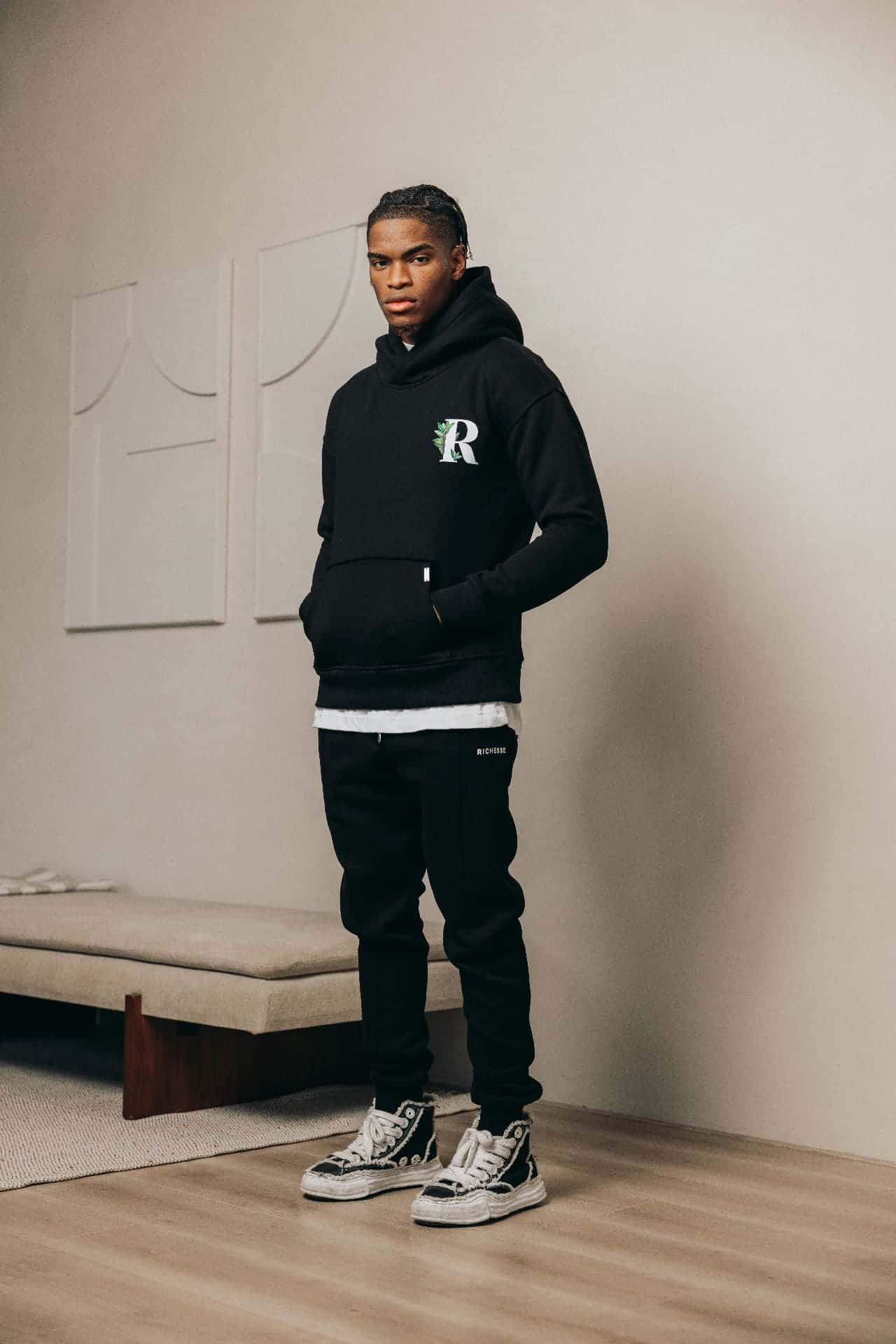
Strong: the most premium look and by far the longest lifespan, because thread doesn't fade the way ink does. Embroidery comes into its own on heavy, sturdy fabric: hoodies, sweaters, caps, jackets, polos and workwear.
Weak: fine details and small text disappear. Below a letter height of about five millimetres, text becomes illegible, and colour gradients don't exist in thread. On thin jersey, dense embroidery pulls the fabric out of shape if you don't reinforce it with backing. Large embroidered areas become heavy, stiff and expensive.
Choose embroidery for a logo or wordmark on sturdy fabric that has to look just as good after thirty washes.
What does printing or embroidery cost?
Rates differ per factory, per design and per run, so separate amounts say little. The structure of the price is the same everywhere, though, and that's how you assess any quote.
- Screen printing: high setup costs (one screen per colour), very low costs per piece. The unit price drops sharply as the run grows.
- DTG: hardly any setup costs, more or less fixed costs per piece. Mainly the printed area counts.
- DTF: hardly any setup costs, costs per transfer. The size of the transfer determines the price, not the number of colours.
- Embroidery: one-off digitising, then costs per thousand stitches. A small chest logo is cheap, a large back embroidery certainly isn't.
- With every technique, an extra placement (chest, back, sleeve, hood) is an extra step and so an extra cost item.
Which technique suits which garment?
This is how we advise it in practice. The fabric plays a big part here: not every technique suits all types of fabric for clothing. Feel free to deviate, but know why. And combining is perfectly fine: an embroidered chest logo, a printed back and a woven neck label on the same piece is very normal.
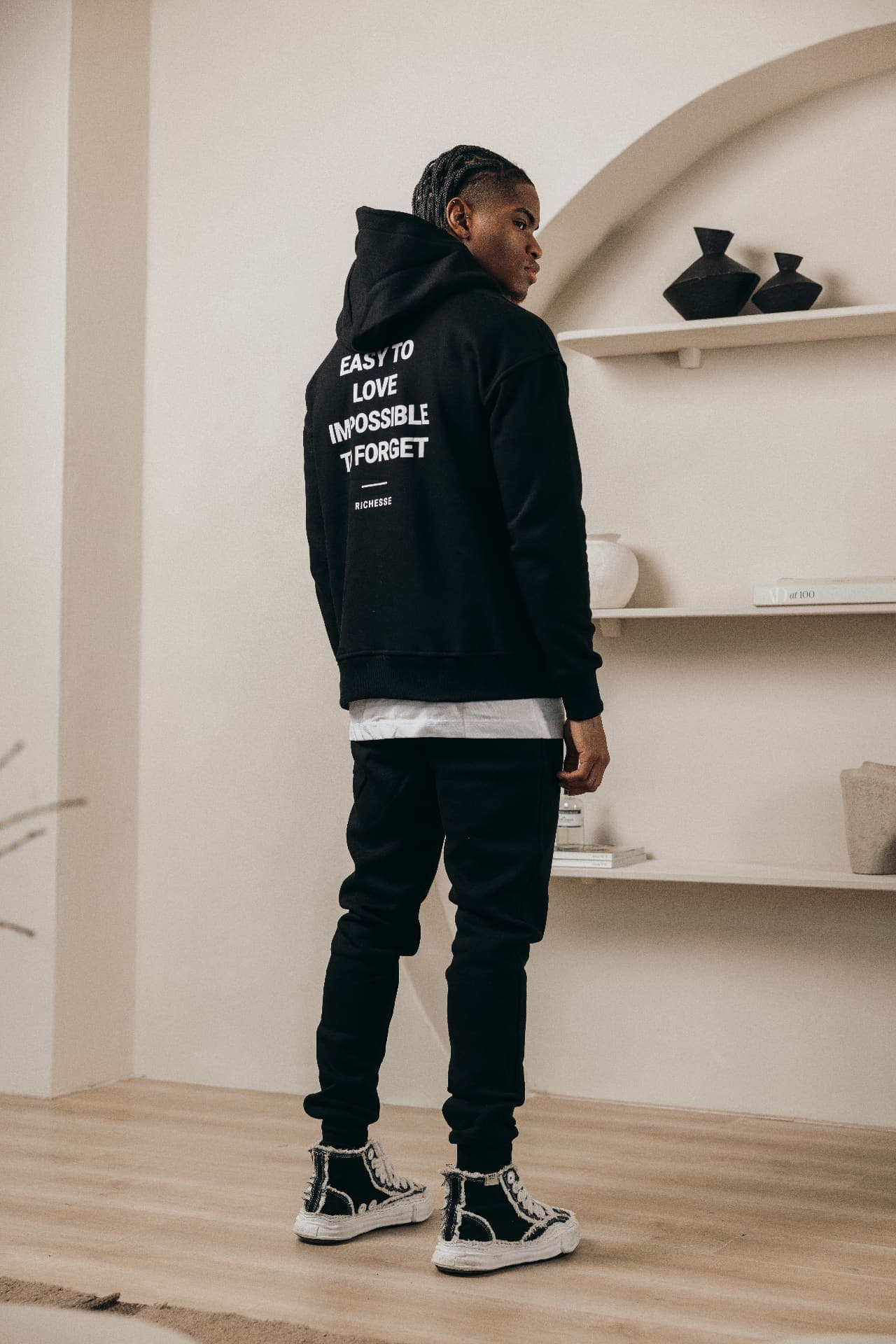
- Hoodies and sweaters (fleece from about 320 GSM): embroidery on the chest or sleeve for a premium brand feel, screen printing for a large back print once the run allows it. Puff print works remarkably well on fleece.
- T-shirts (jersey of about 180 to 260 GSM): screen printing for volume, DTF for photo prints and small runs. Embroidery only small on the chest and with backing, otherwise the thin jersey distorts.
- Workwear and corporate uniforms: embroidery for the company logo, because it stands up best to industrial washing. DTF for colourful logos on polyester and blends, where embroidery turns out too heavy or too expensive.
- Tracksuits and sportswear (polyester): DTF or embroidery, because DTG adheres poorly to polyester.
- Caps: embroidery is the standard, also as 3D puff on the front. Printing on a curved front panel is technically tricky.
- Merchandise and festival clothing: screen printing as soon as you run one design in volume, DTF if you want many different designs in small quantities.
How do you test whether a print or embroidery is wash-resistant?
Every supplier calls its technique wash-resistant. The answer that counts comes from your own sample: wash it ten to twenty times on the programme your customer uses too, and then look for cracks, fading, shrinkage around the print and loose edges.
Torn between two techniques? Have the same design sampled in both. The difference in hand feel can't be conveyed by any description.
Then put the technique, the placement, the size and the result of the wash test in your tech pack. Without that specification, 'the print sits too low' is an opinion afterwards instead of a measurable deviation.