What do you look for in a clothing manufacturer?
The lowest unit price is rarely the lowest total price. A production run that isn't right costs you the bulk, the time to start over and the season you wanted to sell in. A difference of one euro per piece disappears next to that.
Whether a manufacturer is predictable, you can already see before your order: in the way it quotes, samples and communicates. The questions below follow exactly those moments.
Do you choose a factory, middleman or platform?
You'll come across three kinds of parties. A factory makes things itself. A middleman (agent, trading company or production agency) spreads your order across factories it works with. A sourcing platform or business directory is a marketplace where manufacturers sign up; it produces nothing itself.
A middleman has real advantages: one point of contact in your language and time zone, often lower minimums because orders are bundled, and access to several specialisms. Going straight to the factory cuts out a link, in margin and in information: there's nobody between your feedback and the machine that carries it out.
Both work, as long as you know which one you're buying from. The question that settles it: who makes this product, and where is that factory? A party that's clear about that is a good partner in either model. One that talks around it probably doesn't know itself.
A platform is handy for discovering who's out there. It can't assess: it doesn't know which fabric is on the shelf, what minimum a factory applies or which delivery date is feasible, and the suppliers fill in the profiles themselves. Use it for your shortlist and put the questions below directly to the party that produces.
Which production country suits your product depends on your fabric, your quantities and your lead time. We compare that in our article on having clothing made in China or the Netherlands.
Why do you ask for a sample first?
A sample is the only real audition. You hold the fit, fabric, colour, stitching and finish in your hands, and you immediately see whether the factory reads what's in your tech pack, the technical blueprint of your product.
Also judge the route there. Did the factory ask questions about unclear points? Was your feedback fully processed in round two, or only half? A factory that asks follow-up questions and sometimes pushes back is a good sign: it knows the risk of assumptions.
Agree in advance who pays for a correction sample if the deviation lies with production. That differs per factory, and afterwards it's an awkward conversation.
Which MOQ suits your stage?
The MOQ, the minimum order quantity, determines your starting investment and your stock risk. Read the small print: at many factories, an MOQ of 100 means 100 per colour and per fabric, so three colours are 300 pieces.
Also ask whether you can combine styles to reach the minimum, and what the minimum of the fabric itself is. Sometimes it's not the factory but the fabric supplier that sets the limit.
What does a manufacturer's communication tell you?
How a manufacturer communicates before your order is how it communicates during your production. Only then your money is at stake. Look out for five things:
- Response time: do you get an answer within a working day, or only after a reminder?
- One fixed point of contact, or a different name in every email?
- Is everything confirmed in writing, or does it stay with voice messages?
- Are your specifications read back and summarised, or is everything agreed to without questions?
- Do you get photos from production along the way, or do you only hear something at shipping?
How does a manufacturer check quality?
'We check everything' isn't an answer. Ask further on three points: against what, when and by whom.
Against what: against the approved sample (the gold sample) and the size chart with tolerances from your tech pack. Without a standard there's no rejection.
When: during production (inline) and before shipping, not just at the end. Ask which AQL level applies (AQL is a fixed standard for inspection by sampling) and what happens to rejected pieces: are they replaced, credited or shipped along as 'B-grade'?
By whom: the factory itself, your partner on site or an external inspector.
What is the real lead time?
Almost every manufacturer quotes a production time, and that's rarely the whole story. Count in: the sample round or rounds, the delivery time of the fabric (often the real bottleneck), production, transport and, for imports from outside the EU, customs clearance.
So ask for the date the goods are in your warehouse, not for the number of weeks the machines run. And ask what happens if that date isn't met. Anyone with a concrete answer has thought about it; anyone who says 'that doesn't happen' hasn't.
How do you check a manufacturer's certificates?
GOTS, OEKO-TEX, GRS, BSCI and amfori or Sedex all come up in quotes. They don't all say the same thing: some are about the fabric, others about the factory and the working conditions there.
Three questions make it concrete. In whose name is the certificate, the factory or the fabric supplier? What's the certificate number? And until when is it valid? A certificate from your fabric supplier doesn't yet make your garment certified; with GOTS, for example, the whole chain has to be certified before you can call the end product that.
If a manufacturer can't back it up, nothing has to be wrong. But then you don't put the claim on your own website or hangtag either. Only adopt what you can prove.
How do you compare quotes from clothing manufacturers?
On totals, not on unit prices. Two quotes with the same unit price can be tens of percent apart. So list what is and isn't included:
- Fabric, trims and labels: included or quoted separately?
- Prints and embroidery: charged per placement or built into the price?
- Packaging: polybag, hangtag and boxes included?
- Transport and the Incoterm: up to which point does the supplier bear costs and risk?
- For imports from outside the EU: import duties and import VAT.
- Sample costs: are they offset against the production order?
- Payment terms: what deposit, and when is the balance due?
What are red flags with a manufacturer?
Not every deviation is an alarm bell: a higher price can simply mean there's better fabric, more finishing or more checking in it. But take these signals seriously:
- Vagueness about who produces and where the factory is.
- Pushing for bulk production without a sample, to save time.
- No traceable company: no address, no KvK (Dutch Chamber of Commerce) or VAT number, no billing address.
- A quote without specifications, which doesn't say which fabric, which fabric weight (GSM) and which finish you're buying.
How does MakeaLabel score on these questions?
Fair is fair: we're a party in this story ourselves. So judge us on exactly the same points. This is fixed on our side:
- Our own workshop in Turkey, with no agents or traders in between.
- Production from 10 pieces per style and per colour for a plain t-shirt, long sleeve, hoodie or sweater with a print; other products with their own minimum, a fully custom pattern from 150 to 200.
- Fixed prices from 10 pieces: €29.99 per t-shirt and €39.99 per hoodie, excluding VAT, with a print and a printed neck label.
- A short check of your files is free; our designer makes a mock-up for €99.99 and gets your product production ready.
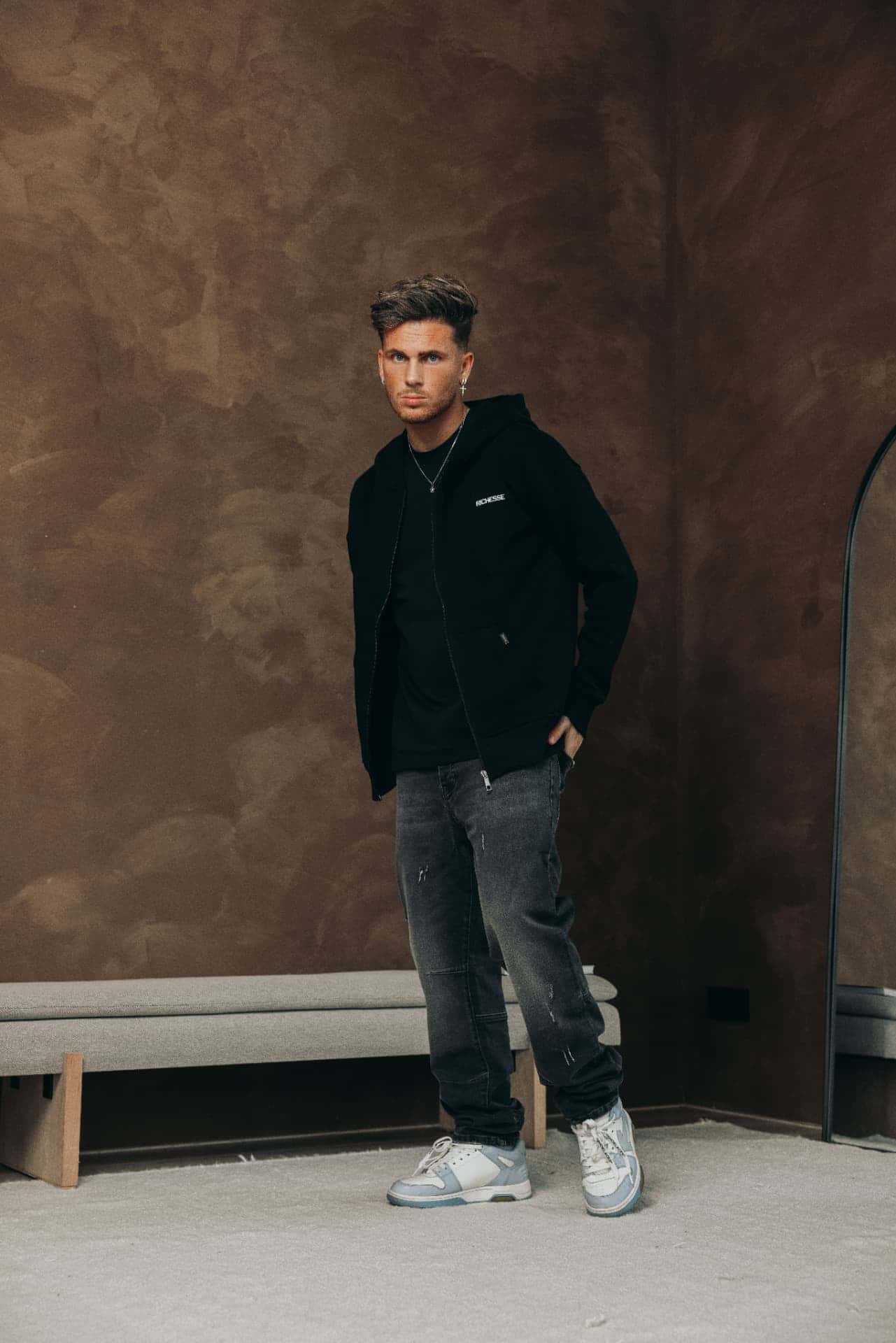
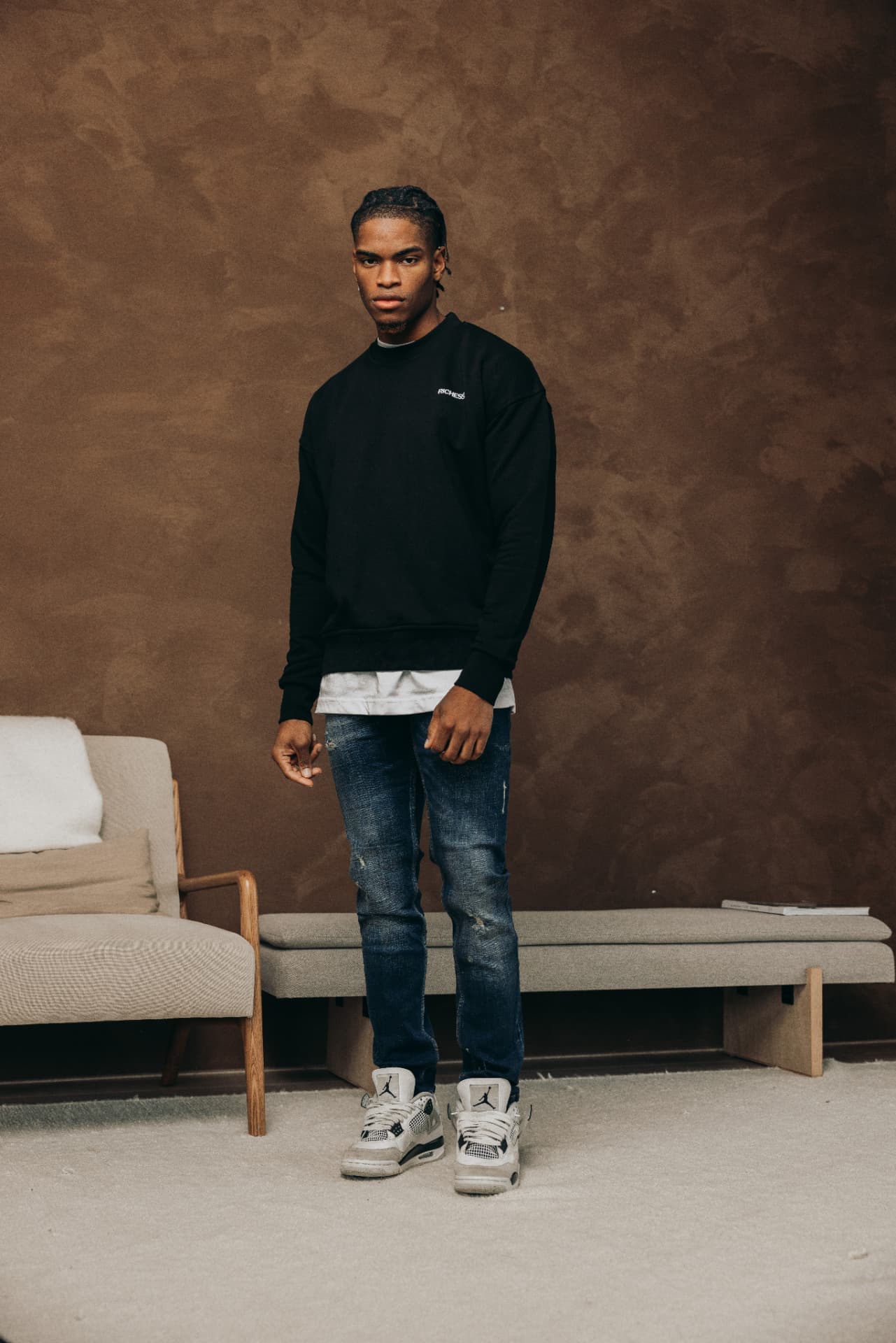
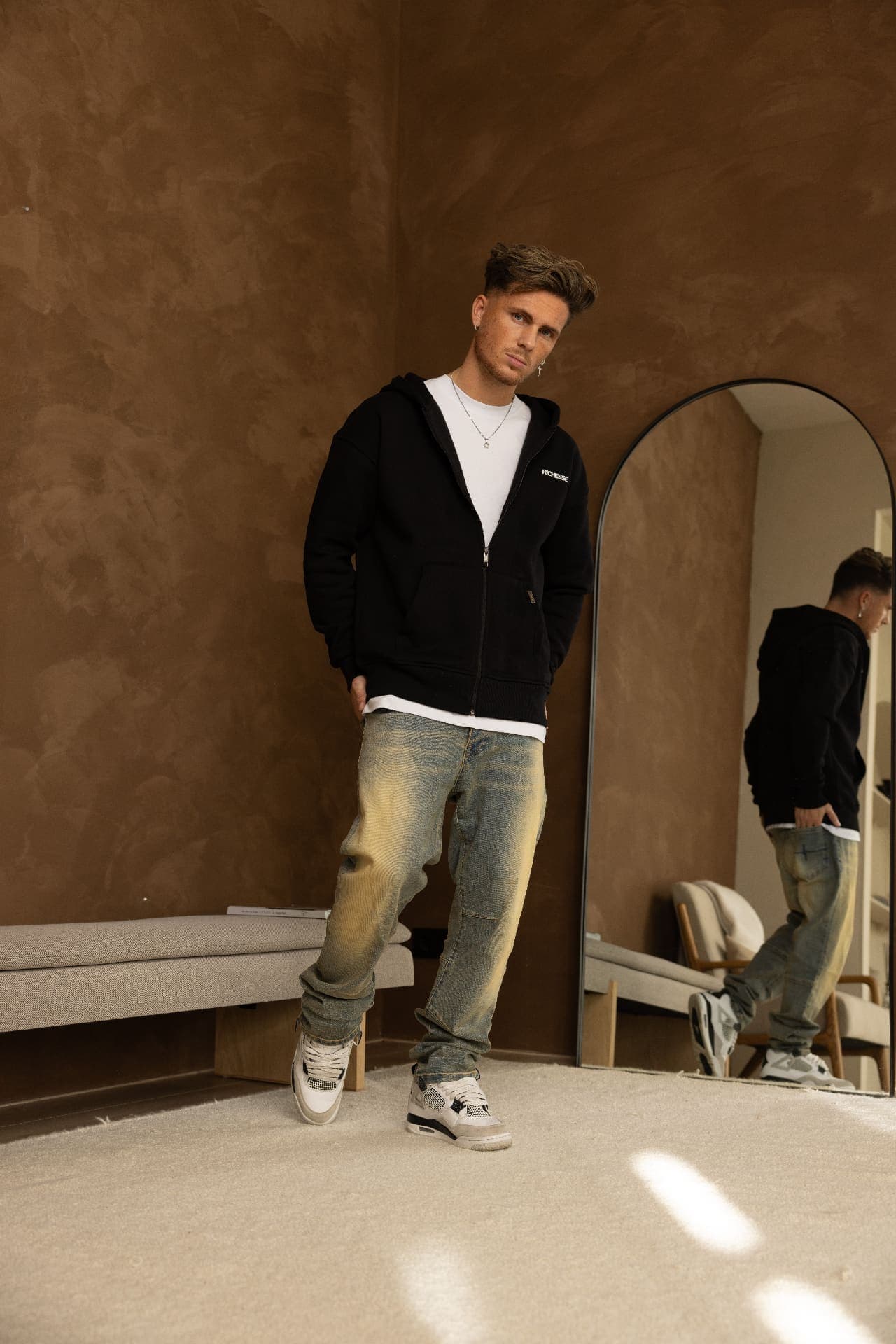
- Born from our own brand Richesse Clothing: we've sat on your side of the table ourselves.
Which ten questions do you ask every manufacturer?
Send these ten questions to every party you're considering. How quickly and how concretely the answers come often says more than the quote underneath.
- Who produces this product, and in which country is that factory?
- What's the MOQ per style, per colour and per fabric?
- What does a sample cost, how long does it take and is it offset against the order?
- Who bears the costs of a correction sample if the deviation lies with production?
- What is production checked against, and at which AQL level?
- What's the lead time to my warehouse, including fabric, production and transport?
- What exactly is included in the unit price, and which Incoterm applies?
- Which certificates are in the factory's name, with number and expiry date?
- Who is my fixed contact person, and within what time do I get an answer?
- What happens if the lead time or the agreed quality isn't met?
How do you get from shortlist to first order?
Pick two or three parties that answer the questions concretely, and have them all sample the same style to exactly the same specification. Only then do you really compare: the same design, the same fabric, the same finish and a price that goes with it.
Want to see the whole process first, from fabric choice and tech pack to sampling, quality control and delivery? Then read the production guide. Who's behind MakeaLabel is on our about us page.