Production or decoration
Custom made or printed clothing. Looks the same, but isn't.
With printing, you only choose the print on an existing garment; with custom made clothing, the garment itself is made for you, with your label. Neither of the two is better; they suit a different moment.
- Pieces per style, own production
- From 10
- For your own production, after payment
- At least 5 to 6 weeks
- Per pack of blank clothing
- 8 pieces
- Delivery from stock
- 1 to 2 working days
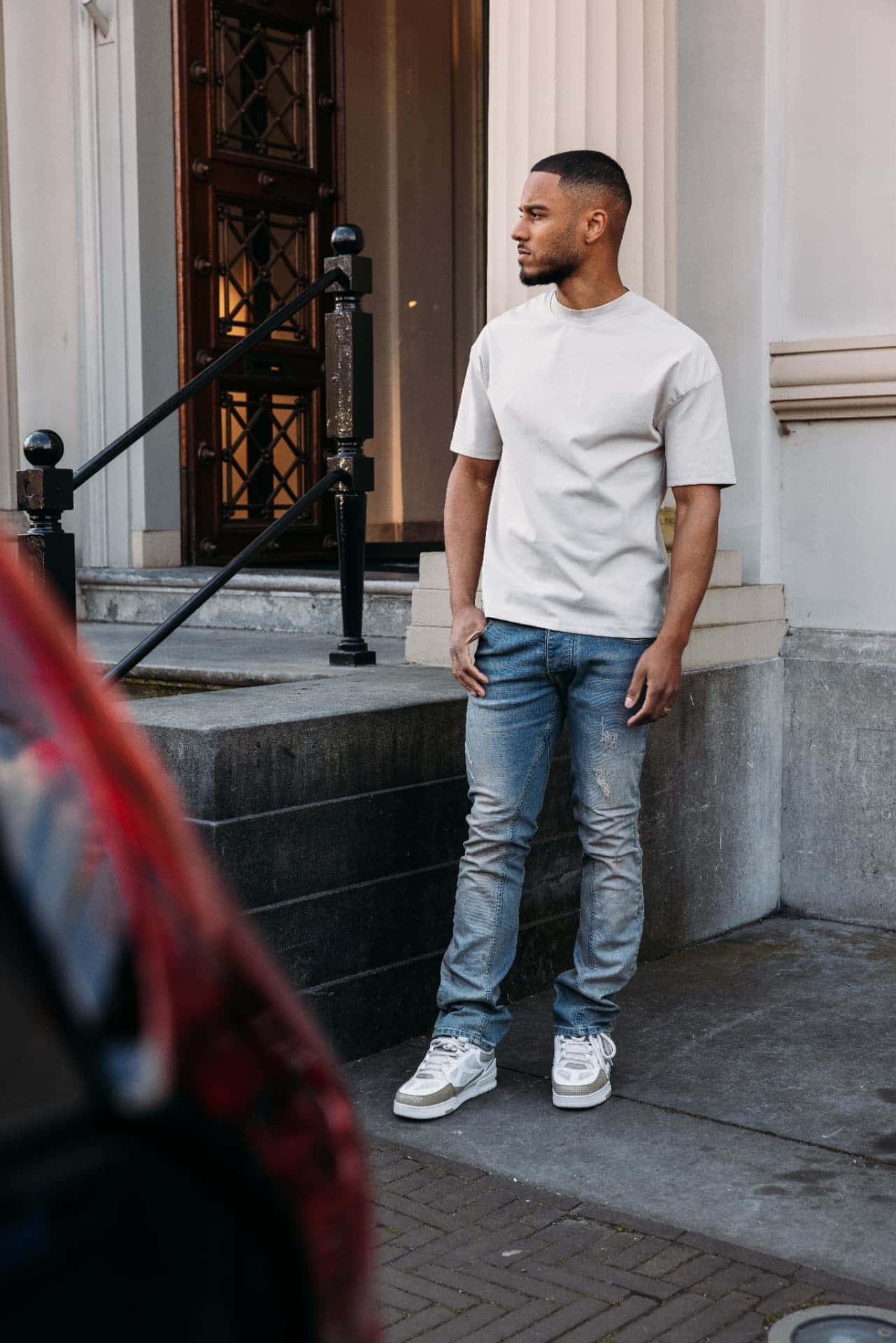
Same on the outside. Not on the inside.
Six points, two answers. After the table, you know which route fits your project.
Minimum | Printing from 1 · production from 10 | Low enough to test a style. |
|---|---|---|
Lead time | Days versus weeks | Production: sample and bulk each at least 5 to 6 weeks. |
Unit price | Fixed prices from 10 | Small quantity: printing is cheaper. Production: fixed prices from 10. |
Uniqueness | Shared versus unique | You share a blank with other brands, not your production. |
Adaptability | Everything versus only the print | Production: you adjust the tech pack. Blank: wait and see. |
Repeatability | Specs versus range | Your tech pack stays; a blank can disappear from the range. |
Sometimes printing wins. Then we say so.
We make clothing and don't do print-on-demand. Still, production isn't always the answer.
Guide
Made or printed
2 min read
In short
With us, your own production starts from 10 pieces per style and takes at least 5 to 6 weeks after payment. We supply blank clothing to print yourself from stock, in packs of 8 pieces, in 1 to 2 working days.
What happens when you have clothing printed?
Printing starts with a garment that already exists. A supplier has a blank t-shirt or hoodie in stock, in a fixed fabric, a fixed weight, a fixed fit and a fixed colour chart. You supply a file, it goes onto the existing product, and that's it.
That is a craft in its own right and it is fast, but it does determine what your product can be. How the fabric feels, how the shoulder falls, how heavy the cotton is, what's in the neck and how it looks after twenty washes: all of that was fixed before you came along. You choose the print; the supplier chose the product.
What happens when you have clothing made?
With your own production, the garment doesn't exist yet. It starts with a tech pack, the technical file for the factory: the sizes, the fabric and the weight in GSM (grams per square metre), the colour codes, the placement of print and labels, the construction and the packaging. Then we make a sample that you approve or reject, and only then does production run.
That takes more preparation and more time: allow at least 5 to 6 weeks for the sample and at least 5 to 6 weeks for production, each after payment. In return, you get a product that is yours alone: your 450 GSM fleece instead of the 280 GSM that happened to be in stock, your neck label and your care label.
Perhaps you're now thinking: then I'm stuck with hundreds of pieces. Not with us: with a low MOQ, the minimum order quantity per style, you start at 10 pieces. A tech pack service is not a free extra, but the quick check of your own files is free.
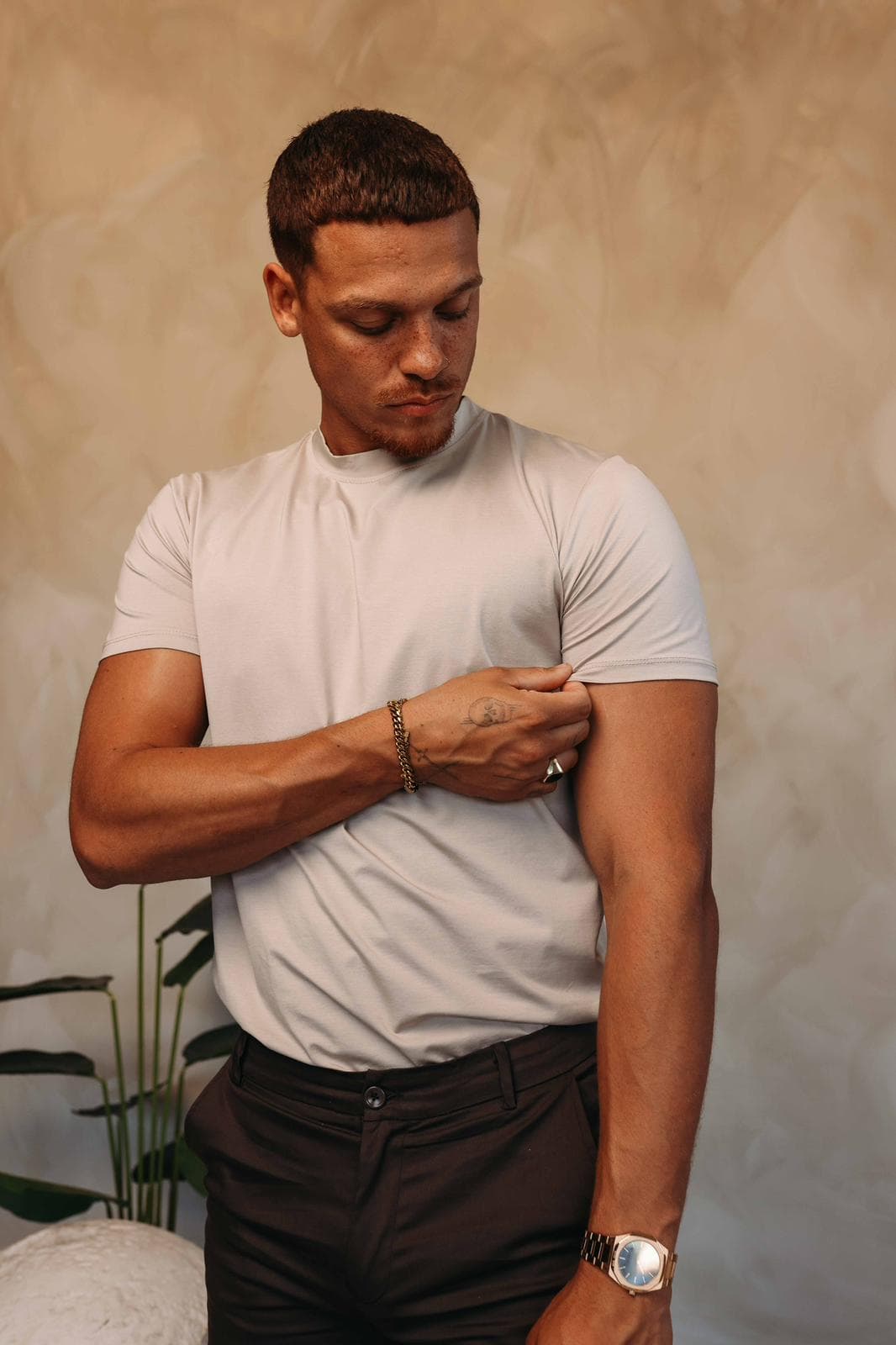
How can you tell whether a supplier makes clothing or only prints it?
Many decoration companies use the language of production. Terms like 'in-house production', 'private label' and 'own clothing line' come up, while in practice a bought-in blank is being printed.
The simplest test consists of two questions. Which fabric weight in GSM can I choose, and will my own neck label go in? If a supplier can confirm neither, you are buying decoration and not production, whatever the service is called.
What do you decide in your own production?
Five decisions that make the difference between a product that is yours and a product with your logo on it. This is where your customer sees and feels the difference.
The fabric and the weight
Production: you · Printing: supplier
With your own production, for larger quantities you choose the construction and the weight in GSM, from light jersey to ultra heavy fleece; from 10 pieces, that is our heavy base fabric. With a blank, you get the weight that's available.
The fit
Production: you · Printing: supplier
Boxy or tailored, a longer sleeve, a higher neck, different size grading: with a fully custom pattern, from 150 to 200 pieces per style and colour, that is set in your tech pack. From 10 pieces, you work on a proven base style. With a blank, the cut is a given.
The colour
Production: you · Printing: supplier
With your own production, we dye to your colour code: exact from 500 pieces, below that as close to your brand colour as possible; from 10 pieces, you choose black, cream or white. With blanks, you choose from the colour chart the supplier carries.
The neck label
Production: you · Printing: usually not
Your own neck label with your brand comes as standard with your own production: printed, or woven and embossed at a surcharge. A printed blank has the blank manufacturer's label in it.
The packaging
Production: you · Printing: sometimes
Every piece goes into its own polybag; your own hangtags are possible from 500 pieces and packaging with your logo from 5,000. With decoration, packaging is often a separate option or not available at all.
Questions about made or printed
Is having clothing made the same as having clothing printed?
No. With printing, the garment already exists and you only change the print. With custom made clothing, the garment is produced for you: your print and labels, and for larger quantities also fabric, weight and colour, are set in a tech pack.
Do you also do print-on-demand or one-off printing?
No, we are deliberately not a print-on-demand company. We do print and embroidery as part of your own production. If you want to print blank clothing yourself, you can buy it from our stock, in packs of 8 pieces per style.
When is printing cheaper than having your own production?
For small quantities and short deadlines. For a handful of pieces for one occasion, a blank with a print is almost always cheaper. If you're building a brand you want to repeat, the sum tips towards your own production, with fixed prices from 10 pieces.
Can I start with printed blanks and switch later?
Certainly, and many brands do. You test with blanks which style catches on and switch to your own production for the second round, with the fabric and the labels you really want. We supply both sides, so you don't have to change partners for it.
Which technique do you use for the branding itself?
For small runs, screen printing, DTF and embroidery; puff print and all-over prints for larger quantities, all-over from 250 pieces. The choice depends on your design, your fabric and your run size. The article on printing or embroidering clothing sets out per technique when it is the best choice.
More about producing with MakeaLabel
Your project. The right route.
Tell us what you want to make and by when. If printing fits better, we say so and point you to our blanks from stock. If production fits better, you get a quote within one working day.