2026 edition
Production guide. Know first, then produce.
This guide shows in eight steps how your first production goes, from concept and cost price to sample and delivery. So you know what you are ordering before you pay.
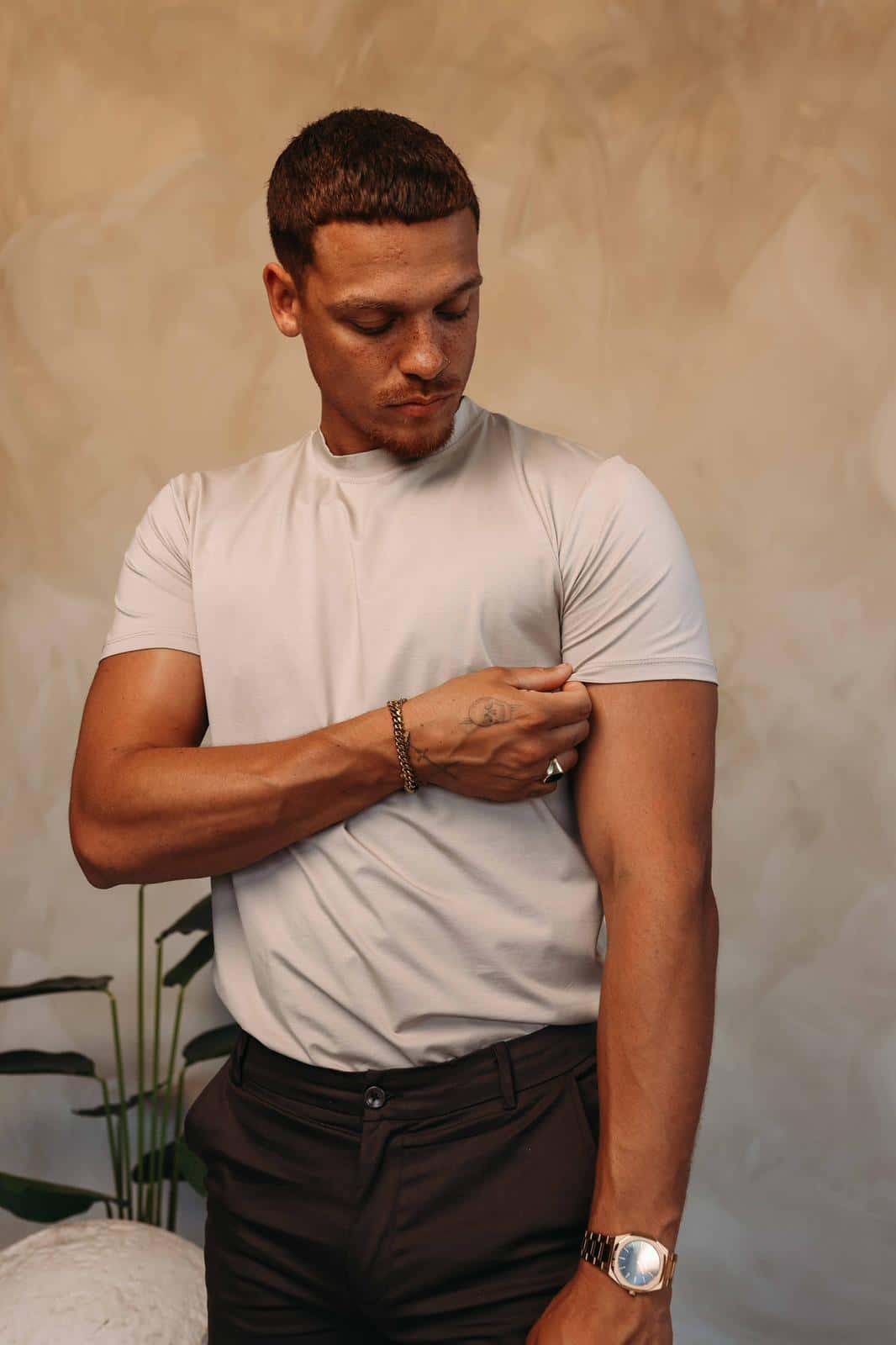
Eight steps. From idea to delivery.
The better you prepare steps 1 to 5, the fewer surprises in steps 6 to 8.
- 01
Concept and positioning
What are you making, for whom and in which price segment? That drives everything.
- 02
Cost price and margin
Work back from your selling price to the cost price you need.
- 03
Fabric and material
Choose fabric type, composition and GSM. You feel the result in the sample.
- 04
Fit and pattern
Set sizes, size grading and fit. This is where the most expensive corrections arise.
- 05
Tech pack
Everything in one document: drawing, sizes, fabric, colour codes, prints and labels.
- 06
Sampling
One to two samples, assessed point by point, with written feedback.
- 07
Production and quality
After your approval the bulk runs, checked against the approved sample.
- 08
Logistics and delivery
Shipped per box to your address, so your collection arrives complete.
17 chapters. 39 pages.
Want it all on paper? The PDF works out every phase above, with four fillable checklists, a cost price calculation model and a glossary of thirty trade terms. €20 one-off · incl. VAT. After ordering, you receive the PDF by email.
Guide
Your first production
5 min read
In short
Fabric, fit, tech pack, quality, minimums and costs: all in plain language, without the noise.
Why does a first production go wrong so often?
You ask for 50 pieces in your own fit and hear that it cannot be done, without anyone explaining why. You get a quote without GSM and without an Incoterm. You order, and only on delivery do you see that the fabric is thinner than expected, the sizes are off and your margin has gone on import duties that nobody mentioned.
That is not bad luck but a knowledge problem, and it can be solved with an afternoon of reading. This guide goes through every phase and tells you per step what to watch out for.
Do you have to arrange your production yourself?
That depends on your manufacturer. The steps in this guide are the same everywhere; only who oversees them differs. So read it even if you produce elsewhere.
Want to have clothing produced without finding a factory yourself? Then we arrange it, from 10 pieces per style. We make your idea ready for production, have a sample made (from €150, depending on the style, at least 5 to 6 weeks after payment) and, after your approval, run the production, also at least 5 to 6 weeks after payment, in our own workshop in Turkey.
Which GSM do you choose for your clothing?
GSM stands for grams per square metre: the weight of the fabric, and the most objective measure of quality in clothing production. A 180 GSM t-shirt is a fine basic; from 240 GSM you get the boxy fit that goes with premium streetwear. Hoodies range from 280 GSM for a light summer version to 480 GSM for heavyweight oversized.
The same weight can still feel completely different. Weave structure, fibre composition and finishing determine the end result together with the weight. A quote without GSM is therefore not a quote.
- Judge fabric and weight in the sample, not on a photo.
- Test shrinkage after washing before you fix a size chart.
- Expect a higher GSM to raise the cost price considerably.
How do you set fit and sizes?
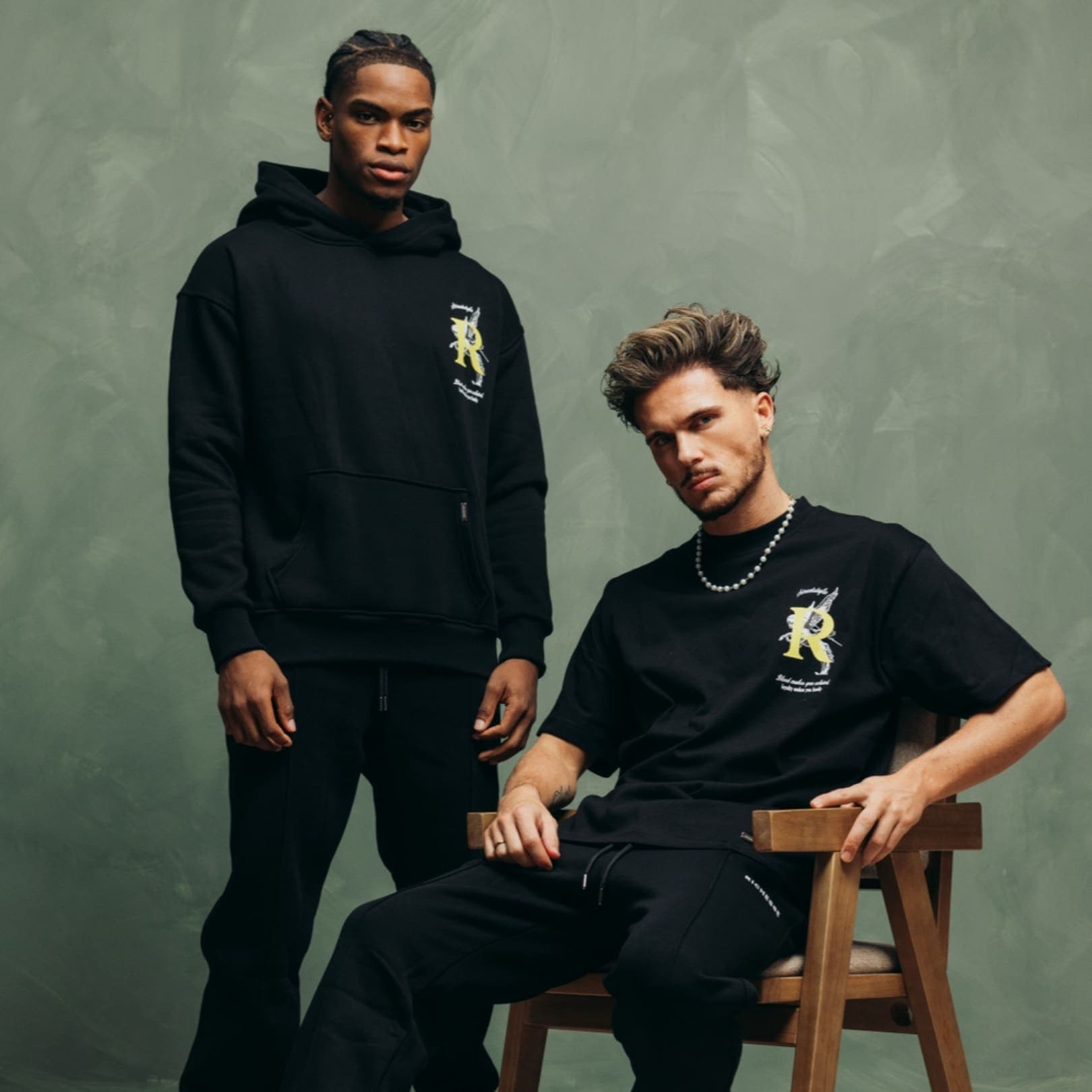
A pattern translates your idea into cutting lines. An existing base pattern from the factory is faster and cheaper; with your own fit you get a product that is yours alone.
Set your size chart per size, including size grading, and always judge the fit on several sizes. A sample that fits perfectly in size M can still hang crooked in XL.
What goes into a tech pack?
Without a tech pack, no factory can seriously quote or sample. It is the technical blueprint the factory literally produces from, and at the same time your evidence if something goes wrong. This belongs in it:
- Technical drawing of the front and back
- Size specifications per size, with tolerances
- Fabric choice including GSM and composition
- Colour codes in Pantone
- Placement, size and technique of prints and logos
- Label specifications: material, size and placement
- Packaging instructions
How many sample rounds do you need?
Count on one to two sample rounds per style, and with us on at least five to six weeks per round, counted from payment. A sample costs from €150, depending on the style; a failed bulk production costs thousands of euros. It is the cheapest insurance there is.
Give feedback in writing and in concrete terms ('shorten the sleeve by 2 cm to 63 cm in size M') and never only by phone. Vague feedback leads to wrong corrections and an extra round.
Do you choose screen printing, embroidery or digital printing?
The technique determines how your product ages. Screen printing is sharp and cost-efficient at volume, embroidery gives a premium look on heavy fabrics and digital printing is attractive for small quantities or many colours.
Branding is more than a logo: a woven neck label, care label, hangtag and packaging together cost €0.50 to €2 per piece and lift your product from generic to branded product.
Which minimums and lead times are normal?
In the market, minimum orders are between 50 and 300 pieces per style; in China often higher. We start from 10 pieces per style, so you can test small.
With us, count on at least five to six weeks of production after payment plus about a week of delivery, depending on style, country and run size, and add the sample phase, which also takes at least five to six weeks. Those blocks together are your planning from first tech pack to delivered collection.
Which costs come on top when you import?
When you import from outside the EU, import duties (on average about 12% on clothing) and 21% import VAT come on top of your price per piece, plus transport and any customs inspections.
Ask for the Incoterm in every quote: it determines up to which point the supplier carries transport and risk. With us, shipping per box is added to the price per piece, €15 per box within the Netherlands, and VAT always comes on top. We pay the import duties on production from Turkey, not you.
Which skills save you money?
The guide is built around six skills. Master them and you judge every quote and every sample yourself, with us and with any other manufacturer.
Working back from your selling price
Start from the price your customer pays and work back to the cost price you need, including labels, transport and margin.
Reading and judging fabric
Recognise composition, weave structure and GSM, and know which combination suits the product you have in mind.
Putting together a tech pack
Put your product on paper in such a way that a factory can get started without follow-up questions.
Judging samples like a professional
Check fit, fabric, colour, print, construction and labels point by point and give feedback that leads to the right correction.
Screening manufacturers
Know which questions to ask about origin, minimums, lead time and quality control before you place an order.
Speaking the language
GSM, MOQ, Incoterm, lay plan, gold sample: thirty trade terms that make the difference between joining the conversation and being overcharged.
Questions about this guide
Can I start a production without experience?
Yes. Many brands that start with us have never produced before. Read this guide so you know what a tech pack, a sample and GSM are, and then tell us your idea. We fill in the technical side, and you judge everything on a physical sample before anything goes into bulk.
Who is this guide for?
For you if you want to start a clothing brand and do not know where to begin, if you already sell but want to set up your own production, or if you get quotes you cannot judge. Not for you if you have been producing for years and know the trade, or if you are looking for a ready-made business plan.
Is this a sales brochure for MakeaLabel?
No. Sixteen of the seventeen chapters are brand-independent and usable with any manufacturer; only the last chapter explains how we work.
I only want 50 pieces in my own fit, is that covered?
Yes. The chapters on minimums, pattern and fit are about exactly that: why factories set minimums, when your own fit pays off and how you stay below a high MOQ. With us, private label starts on a proven base style from 10 pieces per style; a fully custom pattern with your own cut is made to order from 150 pieces per style.
Do I also get advice?
The guide is a document, not an advisory process. If you have questions about your collection after reading it, ask them via the form or via WhatsApp. We take a look with you for free.
Go deeper per topic
Every chapter of the guide has a short online counterpart. These are the three that readers most often continue with, plus the overview of everything we make and the blog.
Requesting a clothing sample
The full step-by-step plan from tech pack to approved sample, with the costs per product.
Price estimate in five questions
See which price segment your project falls into and what moves the price per piece, before you request a quote.
Minimum order per product
Why factories set minimums, what is realistic per region and how you stay below them.
Custom clothing manufacturer
All routes side by side, from private label on a base style to a fully custom pattern.
All articles on the blog
On samples, costs, minimums, fabric and buying.
Enough reading. Time to make.
Tell us what you want to make, how many and when. Within 1 working day you have a transparent quote, with no hidden costs.